


Equipment Purpose
The aviation fuel vapor generator is used for alarm verification of combustible gas detectors. It can quickly vaporize aviation kerosene into nanoscale fine gas particles, and a blower delivers the aviation kerosene gas from the outlet into the internal chamber of the combustible gas detector. On the platinum wire surface inside the chamber, it reacts with the reducing agent, increasing the platinum wire temperature and resistance. Through this principle, the combustible gas detector detects increased aviation kerosene vapor concentration and ultimately triggers an alarm.
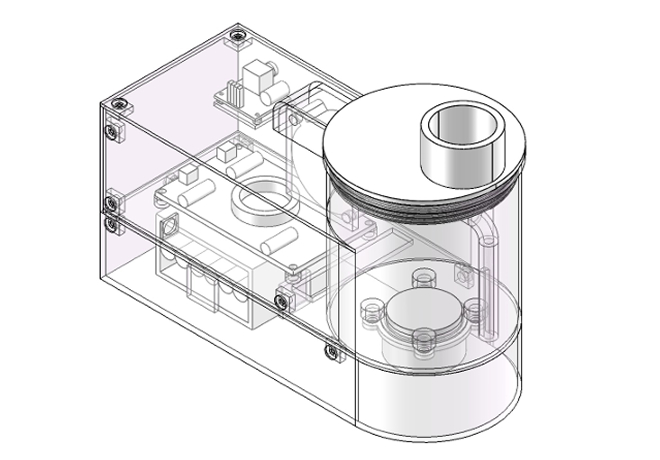
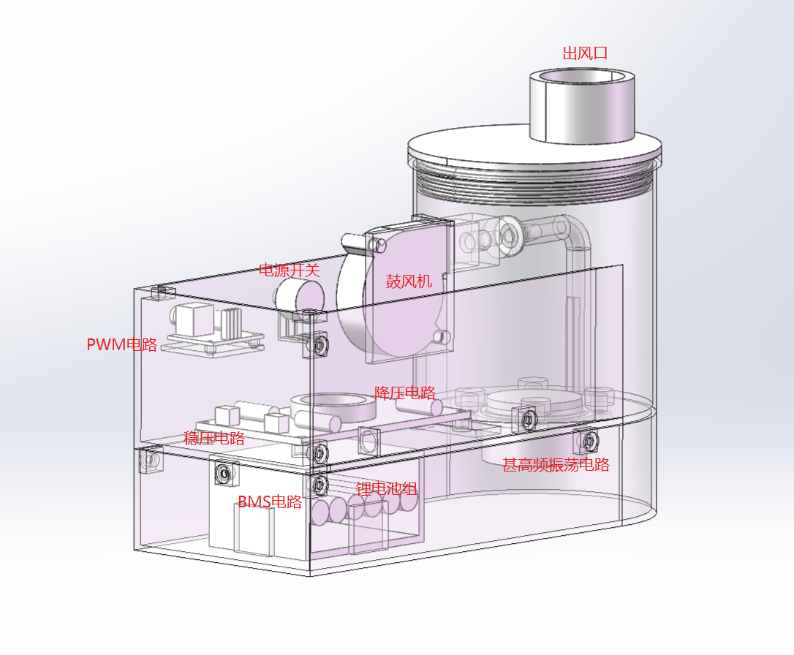
Working Principle
- The very-high-frequency oscillation circuit quickly vaporizes aviation kerosene into nanoscale fine gas particles. The blower sends the aviation kerosene gas from the outlet into the internal chamber of the combustible gas detector, where it reacts with the reducing agent on the platinum wire surface, causing the platinum wire temperature and resistance to rise.
- Lithium battery: power source.
- BMS circuit: protects the lithium battery with short-circuit protection, overcharge protection, over-power protection, and other functions.
- Voltage-stabilizing circuit: stabilizes the voltage from the lithium battery and prevents abnormal fluctuations from damaging the circuit.
- Very-high-frequency oscillation circuit: vaporizes kerosene into nanoscale fine gas particles.
- Step-down circuit: supplies power to the blower and PWM circuit.
- PWM circuit: adjusts blower speed.
- Blower: sends kerosene gas from the outlet into the combustible gas detector chamber.
Technical Parameters
| Name | Attribute |
| Rated Power | 23.28W |
| Rated Voltage | 24VDC |
| Rated Speed | 6000 (rpm) |
| Battery Capacity | 3000mAh |
| Oscillation Frequency | 0.2GHz |
| Working Medium | Aviation kerosene |
| Charging Time | 2 hours 30 minutes |
| Battery Life | 2 hours |
| Explosion-proof Rating | Ex db ⅡC T3 Gb |