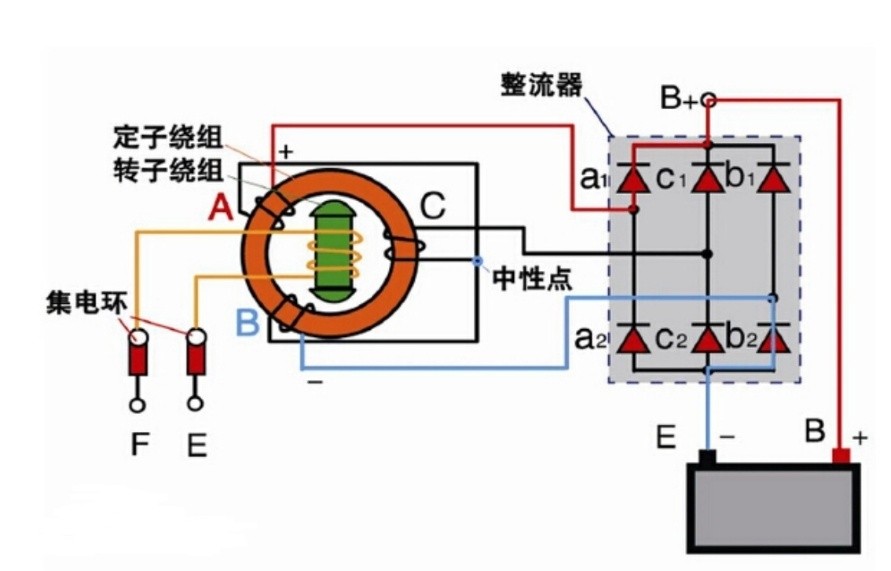


1.Ultra-fast Response Characteristics: Advanced excitation systems are equipped with high-speed processors and high-performance power devices, enabling them to respond in an extremely short time to changes in grid or unit operating status. For example, when a short-circuit fault occurs in the power system and voltage drops sharply, the excitation system can rapidly increase excitation current within milliseconds, quickly restoring generator terminal voltage, ensuring transient stability of the power system, and effectively preventing large-scale outages caused by voltage collapse. Its response speed far exceeds that of traditional excitation devices, greatly improving the system's ability to handle emergencies.
2.High-precision Voltage Regulation: With precise voltage measurement feedback loops and intelligent control algorithms, the excitation system can accurately regulate generator output voltage. Regulation accuracy can reach ±0.5% or higher, ensuring that the generator outputs stable, standards-compliant voltage under different load conditions. Whether under light load, heavy load, or sudden load changes, generator voltage fluctuation is strictly controlled within a very small range, providing high-quality power for users, meeting the requirements of precision equipment with very high voltage-stability demands, and reducing damage caused by unstable voltage.
3.Strong Adaptability and Intelligent Control: The system has powerful adaptive capability and can automatically adjust control strategies according to different generator operating conditions, power-system network-structure changes, and various fault conditions. Using intelligent algorithms such as fuzzy control and neural-network control, the excitation system optimizes the excitation regulation process and maintains optimal performance in complex and changing operating environments. For example, in hydro, thermal, wind, and other generator units, it can perform precise excitation control according to unit characteristics and operating features, significantly improving unit operating efficiency and reliability.
4.Highly Reliable Redundant Design: The hardware adopts a redundant structure, with standby units for key components such as power modules and controllers. When the main module fails, the standby module can switch in seamlessly at once, ensuring uninterrupted excitation-system operation. At the software level, multiple fault-detection and fault-tolerance mechanisms monitor system status in real time. Once an abnormality is detected, self-diagnosis and repair are performed immediately, greatly reducing the system failure rate, ensuring long-term stable operation of the power system, and reducing unit downtime and economic losses caused by excitation-system faults.
5.High-efficiency Energy-saving Design Concept: The new excitation system fully considers energy-saving factors in its design. By optimizing circuit topology, using low-loss power devices, and intelligently adjusting excitation current, it effectively reduces its own energy consumption. While ensuring normal generator operation and meeting power-system requirements, it can save 10% to 20% energy compared with traditional excitation systems, reducing power-generation costs and aligning with current green-energy development trends, contributing to sustainable development in the power industry.
6.Convenient Communication and Remote Monitoring: Supports multiple communication protocols such as Modbus and IEC 61850, enabling seamless communication with plant automation systems and grid dispatch centers. Operation and maintenance personnel can obtain excitation-system operating parameters and status information in real time through a remote monitoring platform and perform remote operation and debugging. Whether locally or remotely, potential problems can be identified and handled promptly, improving O&M efficiency, reducing on-site O&M workload and cost, and enhancing intelligent management of the power system.
2.High-precision Voltage Regulation: With precise voltage measurement feedback loops and intelligent control algorithms, the excitation system can accurately regulate generator output voltage. Regulation accuracy can reach ±0.5% or higher, ensuring that the generator outputs stable, standards-compliant voltage under different load conditions. Whether under light load, heavy load, or sudden load changes, generator voltage fluctuation is strictly controlled within a very small range, providing high-quality power for users, meeting the requirements of precision equipment with very high voltage-stability demands, and reducing damage caused by unstable voltage.
3.Strong Adaptability and Intelligent Control: The system has powerful adaptive capability and can automatically adjust control strategies according to different generator operating conditions, power-system network-structure changes, and various fault conditions. Using intelligent algorithms such as fuzzy control and neural-network control, the excitation system optimizes the excitation regulation process and maintains optimal performance in complex and changing operating environments. For example, in hydro, thermal, wind, and other generator units, it can perform precise excitation control according to unit characteristics and operating features, significantly improving unit operating efficiency and reliability.
4.Highly Reliable Redundant Design: The hardware adopts a redundant structure, with standby units for key components such as power modules and controllers. When the main module fails, the standby module can switch in seamlessly at once, ensuring uninterrupted excitation-system operation. At the software level, multiple fault-detection and fault-tolerance mechanisms monitor system status in real time. Once an abnormality is detected, self-diagnosis and repair are performed immediately, greatly reducing the system failure rate, ensuring long-term stable operation of the power system, and reducing unit downtime and economic losses caused by excitation-system faults.
5.High-efficiency Energy-saving Design Concept: The new excitation system fully considers energy-saving factors in its design. By optimizing circuit topology, using low-loss power devices, and intelligently adjusting excitation current, it effectively reduces its own energy consumption. While ensuring normal generator operation and meeting power-system requirements, it can save 10% to 20% energy compared with traditional excitation systems, reducing power-generation costs and aligning with current green-energy development trends, contributing to sustainable development in the power industry.
6.Convenient Communication and Remote Monitoring: Supports multiple communication protocols such as Modbus and IEC 61850, enabling seamless communication with plant automation systems and grid dispatch centers. Operation and maintenance personnel can obtain excitation-system operating parameters and status information in real time through a remote monitoring platform and perform remote operation and debugging. Whether locally or remotely, potential problems can be identified and handled promptly, improving O&M efficiency, reducing on-site O&M workload and cost, and enhancing intelligent management of the power system.