


Introduction
In industrial production and equipment maintenance, unexpected failures can mean downtime, urgent repairs and safety hazards. The traditional reactive approach of repairing equipment only after it fails no longer meets the demands of efficient, stable and continuous production.
Online condition monitoring systems continuously collect key data such as vibration, temperature and noise to track equipment health around the clock and anticipate problems. They shift maintenance from emergency repairs to proactive prevention, enabling early warnings and targeted action before failures occur and improving equipment reliability and maintenance efficiency.
Traditional Manual Inspection vs. Online Equipment Condition Monitoring

Monitoring System Overview
TSI Monitoring
In large rotating machines such as steam turbines, compressors and generators, turbine supervisory instrumentation (TSI) continuously monitors key mechanical parameters, including shaft vibration, axial displacement and speed. This helps maintain safe rotor-stator clearances and prevent catastrophic events such as rubbing, shaft instability and overspeed.
Continuous monitoring enables TSI systems to issue an immediate alarm or trip command when mechanical conditions move outside safe limits, instead of waiting for severe rubbing or fracture to force a shutdown. This provides a final line of protection for safe startup and stable operation and a foundation for reliable, long-term service.
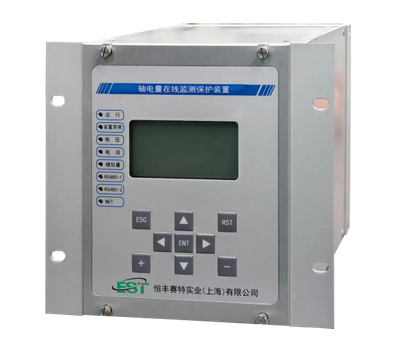
Shaft Electrical Parameter Monitoring
In rotating machinery, shaft voltages caused by magnetic circuit asymmetry, electrostatic induction or variable-frequency drives can break down the oil film and produce shaft currents, resulting in electrical erosion of bearings.
Real-time monitoring detects abnormal voltage increases or discharge before visible bearing damage develops, allowing grounding and insulation to be checked promptly. This can prevent catastrophic shutdowns caused by seized bearings, extend bearing life and support long-term operation.
Rotor Interturn Short-Circuit Monitoring
In rotating machinery, particularly generators and synchronous condensers, rotor interturn short circuits caused by insulation aging, thermal expansion and contraction, or mechanical stress can distort the magnetic field, creating unbalanced magnetic pull and thermal rotor bowing.
Real-time monitoring, including combined vibration and electrical parameter analysis, can provide early warnings at the onset of a short circuit—for example, when insulation damage is slight or vibration changes subtly with excitation current—before severe rotor deformation or burned insulation forces a shutdown. It can also prevent escalation into a more serious two-point rotor ground fault, helping safeguard grid stability and generating equipment.
Introducing Eversafe's Online Monitoring System for Rotating Equipment
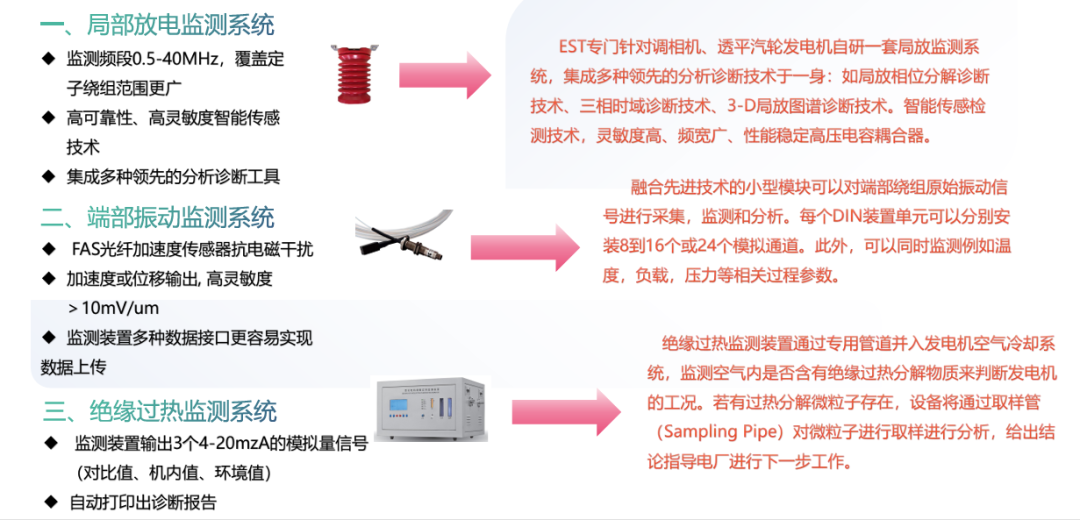
Eversafe's online monitoring system for rotating equipment integrates TSI monitoring, shaft electrical parameter monitoring and interturn short-circuit protection. It also supports real-time monitoring of partial discharge, end-winding vibration and insulation overheating, providing comprehensive health assessment and early fault warnings for rotating machinery.
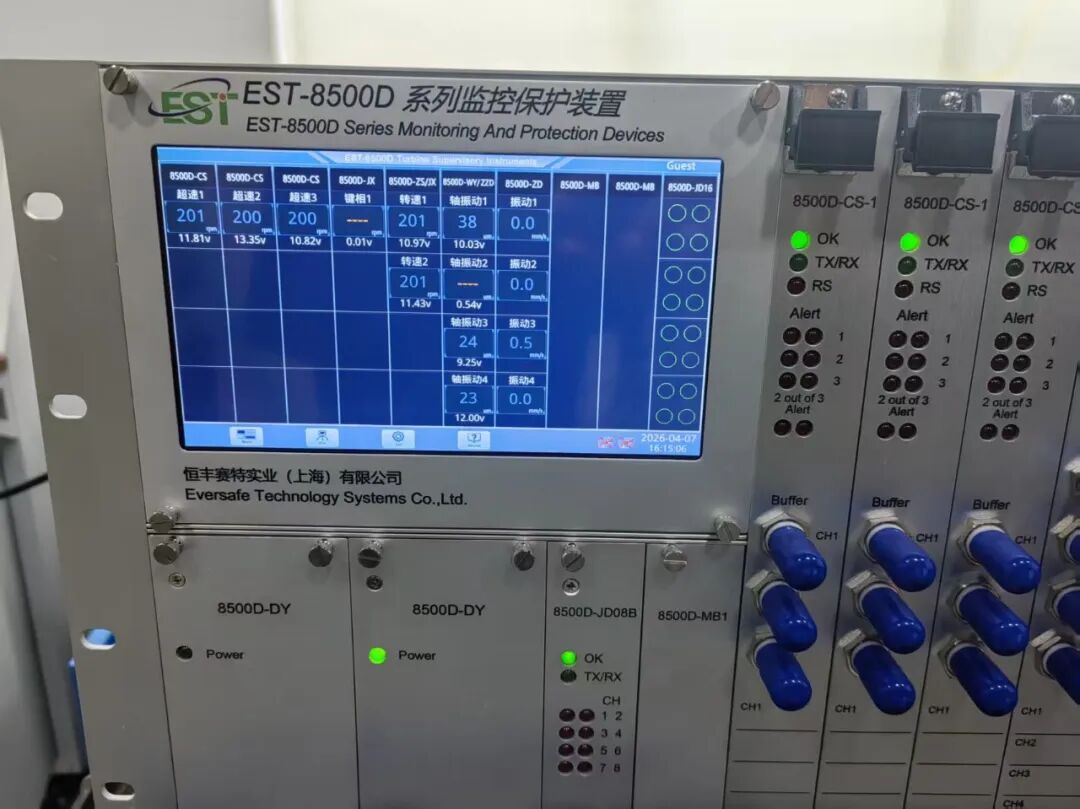
TSI Instruments: Modular Speed, Overspeed Protection, Keyphasor, Vibration and Relay Functions
Instrument Features:
√ Built-in high-definition LCD for viewing real-time status
√ Modular, hot-swappable design with independently operating functions
√ Function cards and relay modules provide multiple functions and levels of warning and protection
High-precision sensor: ±1 mA error over 0%–100% Ipn
System dynamic response time: 1 μs
Resistant to strong electromagnetic interference
√ High reliability: dual external auxiliary power supplies
√ High adaptability: wide power supply range of AC 85–264 V or DC 110–370 V, with custom options available
√ Low power consumption: ≤35 VA
√ Overvoltage withstand capability: continuous operation at 1.2 times rated voltage; 3 seconds at 1.3 times rated voltage
√ Multiple output interfaces: six 4–20 mA transmitter outputs; six potential-free relay outputs rated AC 250 V 8 A/DC 30 V 8 A; RS485 and RJ45 Ethernet interfaces
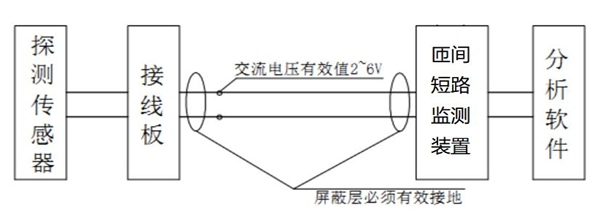
Eversafe independently develops and manufactures the complete interturn short-circuit monitoring system, comprising detection sensors, a signal terminal board, signal transmission cables, a monitoring unit, and analysis and diagnostic software.
Online Monitoring Software Overview
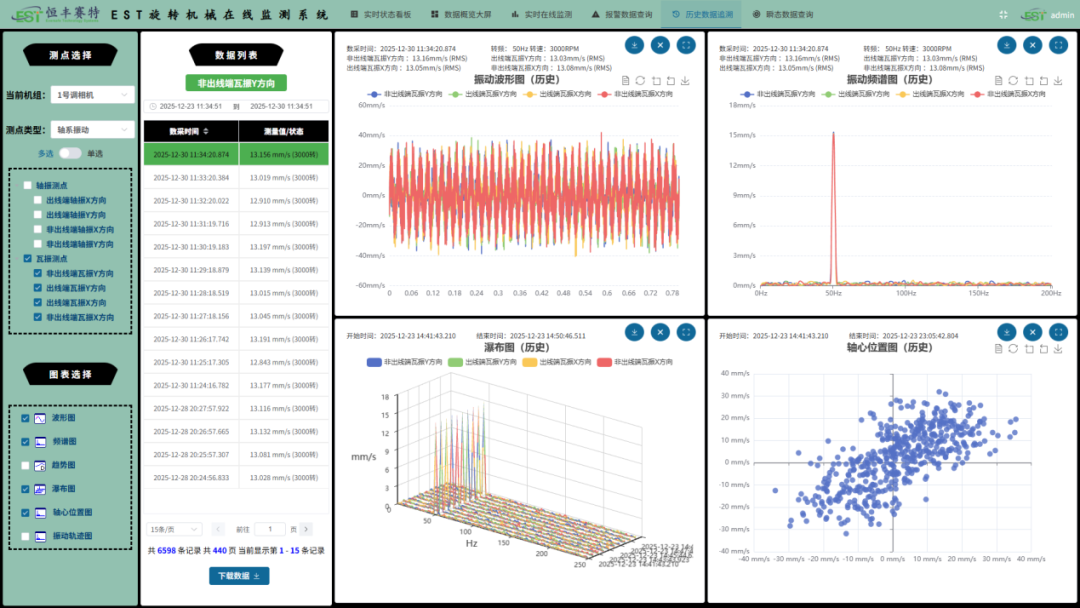
A browser/server architecture enables access from multiple devices through a browser, supporting remote monitoring by field personnel and managers while reducing client maintenance costs.
√ Three-layer architecture: presentation layer (web interface), business logic layer (data analysis and alarms), and data storage layer (relational database).
√ Real-time vibration waveforms, spectra and process data, with parallel monitoring of multiple machines.
√ Integrated alarms with multiple thresholds (warning/danger) and protective shutdown triggering.
Data Transmission and Integration
√ Hybrid RS485 and industrial Ethernet networking with Modbus compatibility connects seamlessly to a range of high-precision sensors for efficient data acquisition.
√ Edge computing gateways preprocess key data to reduce network latency and server load.
Intelligent Analysis Algorithms
√ Time-frequency analysis, including FFT spectral analysis and wavelet transforms, accurately identifies bearing wear, rotor imbalance and other faults.
√ Integrated AI models such as LSTM and CNN enable automatic fault classification and remaining useful life prediction.
Visualization and Scalability
√ Dynamic waveform displays, spectral waterfall plots and other visualization tools support historical data review and comparative analysis.
√ The modular design supports optional partial discharge, end-winding vibration and insulation overheating monitoring, with later expansion of sensor nodes or functions such as air-gap monitoring.
Looking Ahead
For businesses, online condition monitoring is about more than tracking parameters: it means understanding what equipment behavior reveals. Small changes can expose emerging faults and turn reactive maintenance into proactive control. Whether for high-value production assets or frequently used general machinery, applying condition monitoring effectively reduces failures, improves output and delivers real cost savings and efficiency gains.

Contact Us